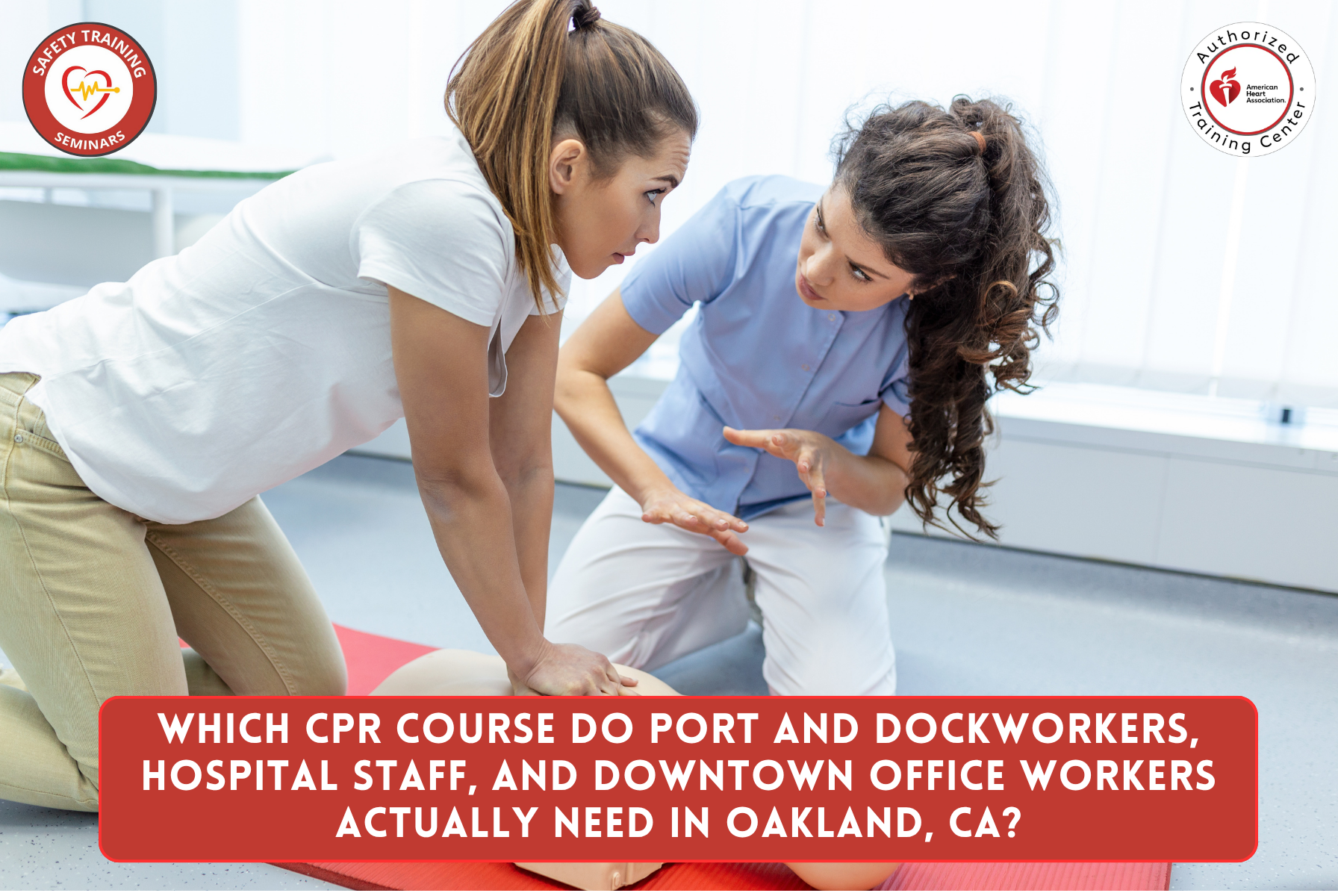
Selecting the correct CPR certification in Oakland depends heavily on your specific job role, regulatory requirements, and workplace mandates. A registered nurse at a regional medical center, a longshore worker at the Port of Oakland, and an administrative professional in a City Center high-rise all face vastly different compliance standards. Registering for a basic lay-responder class when your employer requires advanced clinical credentials wastes time and money—while taking a complex clinical course when you only need workplace First Aid can leave you over-prepared on theory but lacking basic practical protocols.
Key Takeaway: Healthcare professionals and clinical students require Basic Life Support (BLS), which covers multi-rescuer resuscitation and advanced airway management. Non-clinical employees, port workers, and corporate staff generally need a standard CPR/AED and First Aid course aligned with OSHA workplace guidelines.
Aligning CPR Certification Levels with Oakland Job Roles
Certifications are not one-size-fits-all. Training requirements are defined by state licensing boards, regulatory agencies like OSHA, and individual facility credentialing offices. Matching your occupation to the correct training track ensures full regulatory compliance.
Basic Life Support (BLS) for Healthcare Personnel
BLS is the professional standard for healthcare providers. This curriculum focuses on high-quality cardiopulmonary resuscitation for patients of all ages, team-based resuscitation dynamics, bag-valve-mask (BVM) ventilation, automated external defibrillator (AED) integration, and foreign-body airway obstruction removal.
This level is typically required for:
- Registered nurses, nurse practitioners, and physician assistants
- Physicians, resident doctors, and medical students
- Dentists, dental hygienists, and dental assistants
- Emergency medical technicians (EMTs) and paramedics
- Physical therapists, occupational therapists, and clinical support staff
CPR, AED, and First Aid for Non-Clinical Roles
Standard CPR/AED and First Aid training covers adult, child, and infant resuscitation, AED operation, choking relief, and emergency first aid responses for trauma, environmental injuries, and sudden illness.
This level is appropriate for:
- Port and dockworkers, maritime logistics personnel, and warehouse staff
- Downtown corporate office workers, facility managers, and safety directors
- Construction supervisors and field technicians
- Teachers, daycare staff, and youth program directors
- Fitness trainers, coaches, and personal caregivers
Training Needs for Port and Dockworkers Near the Oakland Waterfront
The maritime, logistics, and industrial operations along the Port of Oakland present specialized safety environments. Industrial job sites require immediate emergency response protocols because emergency medical services (EMS) access can involve complex routing through industrial terminals, staging yards, and shipping gates.
Workers in heavy industry, maritime logistics, and warehousing need training compliant with OSHA 29 CFR 1910.151 standards. Standard CPR and First Aid courses equip port workers to manage high-impact trauma, severe bleeding, crush injuries, heat illness, and sudden cardiac emergencies until municipal first responders arrive.
Because dock environments present unique industrial hazards, workplace safety coordinators generally mandate comprehensive CPR/AED and First Aid training rather than clinical BLS. Hands-on practice with AEDs is particularly vital in large facility layouts where fixed automated defibrillators are stationed across expansive yards or distribution centers.
Medical Center and Clinical Training Requirements
Oakland is home to major regional medical centers, specialized pediatric facilities, outpatient surgical centers, and community health networks. Clinical employees within these facilities face strict credentialing standards enforced by accrediting organizations like The Joint Commission and California state licensing boards.
Hospital staff, clinical researchers, and nursing students must maintain an active BLS certification. Unlike general workplace CPR, BLS testing includes multi-rescuer team scenarios, advanced pulse checks, bag-valve-mask ventilation, and clinical rhythm analysis using AEDs.
Healthcare professionals in critical care, emergency departments, surgical suites, or pediatric units often require advanced certifications beyond foundational BLS:
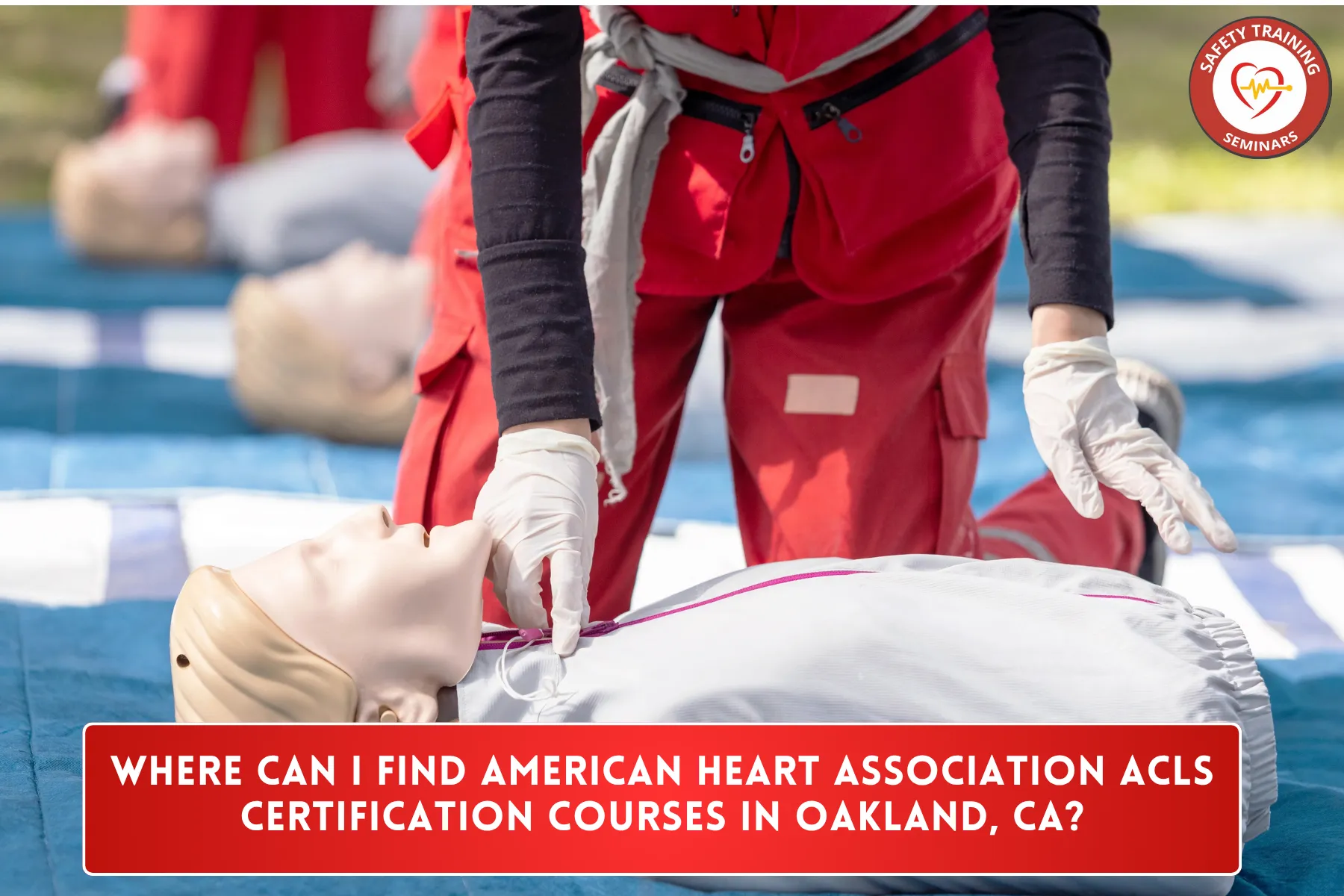
- Advanced Cardiovascular Life Support (ACLS): Required for clinicians managing complex cardiovascular emergencies, adult cardiac arrest, acute coronary syndromes, and stroke.
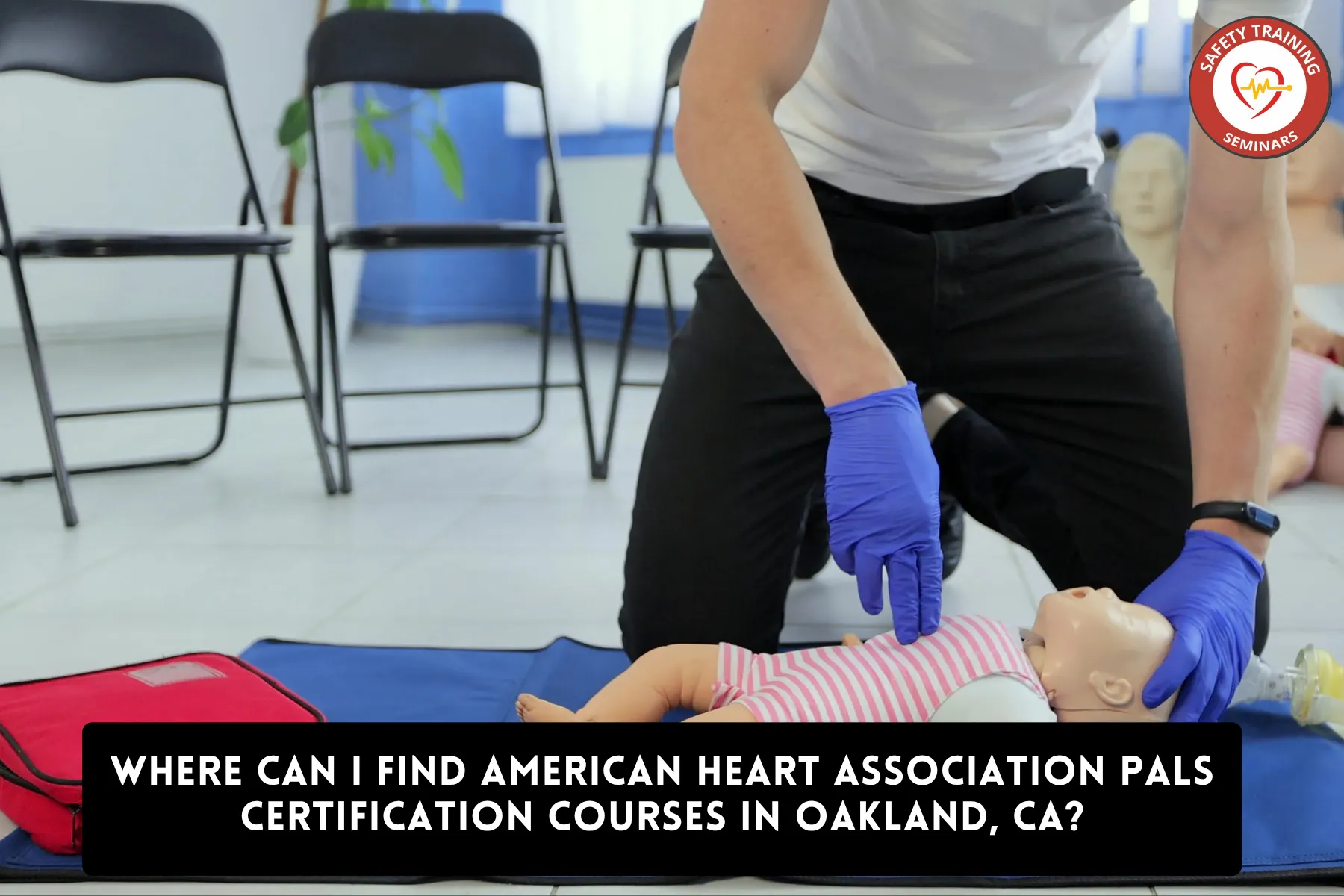
- Pediatric Advanced Life Support (PALS): Mandated for healthcare providers treating critically ill or injured infants and children in pediatric emergency and intensive care units.
- Neonatal Resuscitation Program (NRP): Designed for delivery room teams, neonatal intensive care unit (NICU) staff, and clinicians caring for newborns during immediate post-birth resuscitation.
Clinical workers seeking to maintain active hospital credentials can review options for American Heart Association BLS classes in Oakland to ensure their course meets institutional compliance standards.
CPR Requirements for Downtown Office Workers and Corporate Teams
Commercial office towers, tech hubs, and government administrative offices in Downtown Oakland and the City Center corridor operate under corporate safety policies and general Cal/OSHA requirements. Building safety teams, emergency action committee members, floor wardens, and general office staff benefit from streamlined lay-responder training.
Corporate employees need clear, actionable skills to respond to sudden cardiac arrest, choking episodes, or medical emergencies in high-density office environments. Standard CPR/AED training provides clear instruction on recognizing cardiac arrest, performing high-quality chest compressions, calling emergency services, and using a commercial AED safely.
For workplace safety teams balancing busy schedules, blended learning formats—combining online cognitive coursework with a short, in-person hands-on skills evaluation—provide an efficient way to achieve compliance without sacrificing working hours.
Comparing Certification Tracks
Selecting the wrong course can result in rejected employer documentation or unnecessary coursework. The comparison below clarifies key differences between the primary training tracks:
| Course Feature | BLS for Healthcare Providers | Standard CPR / AED & First Aid |
| Primary Audience | Nurses, doctors, EMTs, clinical students | Office staff, port workers, teachers, general public |
| Regulatory Scope | Clinical licensing boards, hospital credentialing | OSHA workplace safety guidelines, state childcare rules |
| Resuscitation Focus | 1-rescuer and 2-rescuer adult, child, and infant CPR | 1-rescuer adult, child, and infant CPR |
| Airway Management | Bag-valve-mask (BVM) ventilation & barrier devices | Pocket mask and barrier face shields |
| Advanced Topics | Pulse checks, team dynamics, advanced airways | Environmental emergencies, bleeding control, trauma |
The Importance of Hands-On Skills Verification
Purely online CPR certificates without an in-person, hands-on skills practice session are widely rejected by healthcare employers, state licensing boards, Cal/OSHA inspectors, and national credentialing bodies.
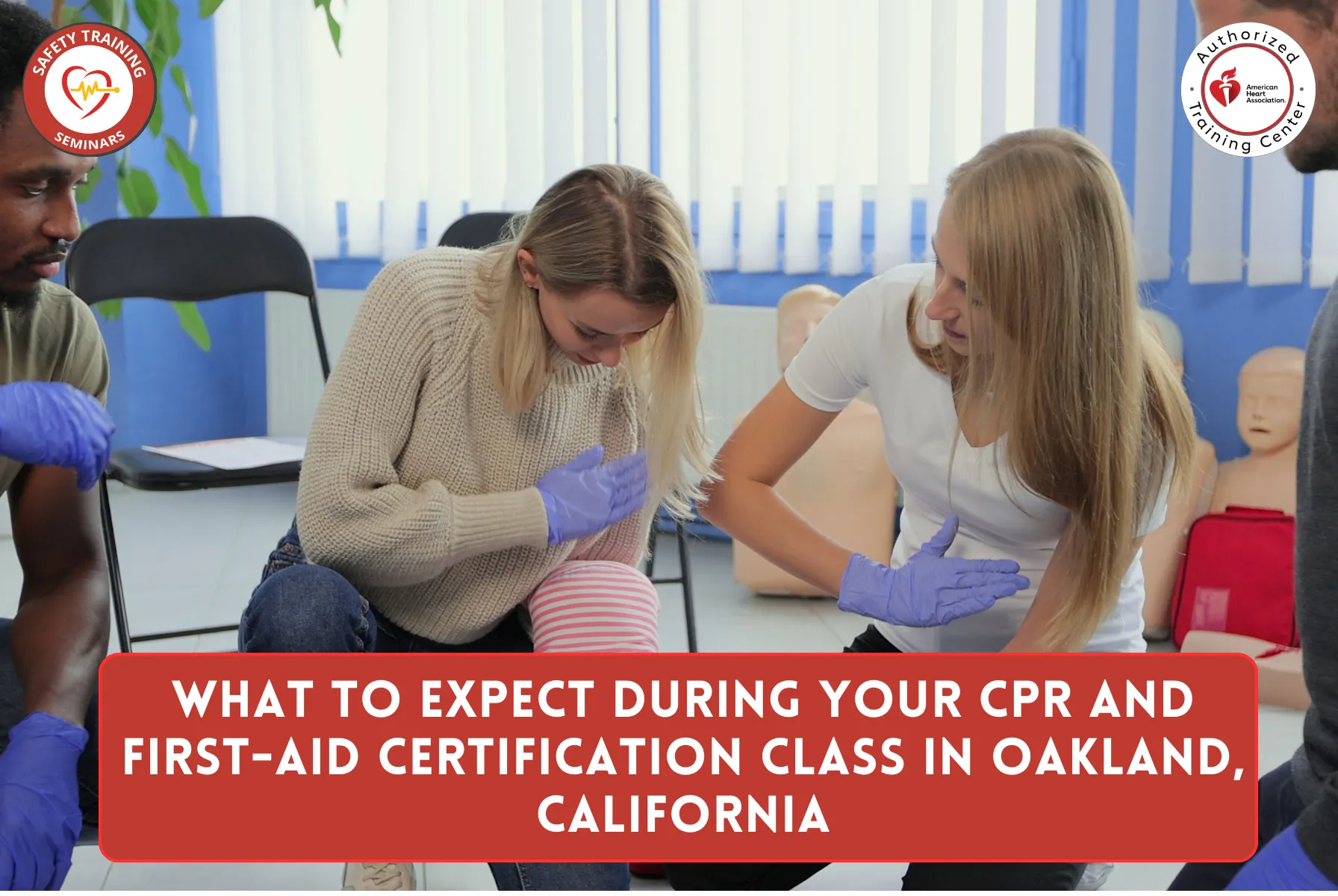
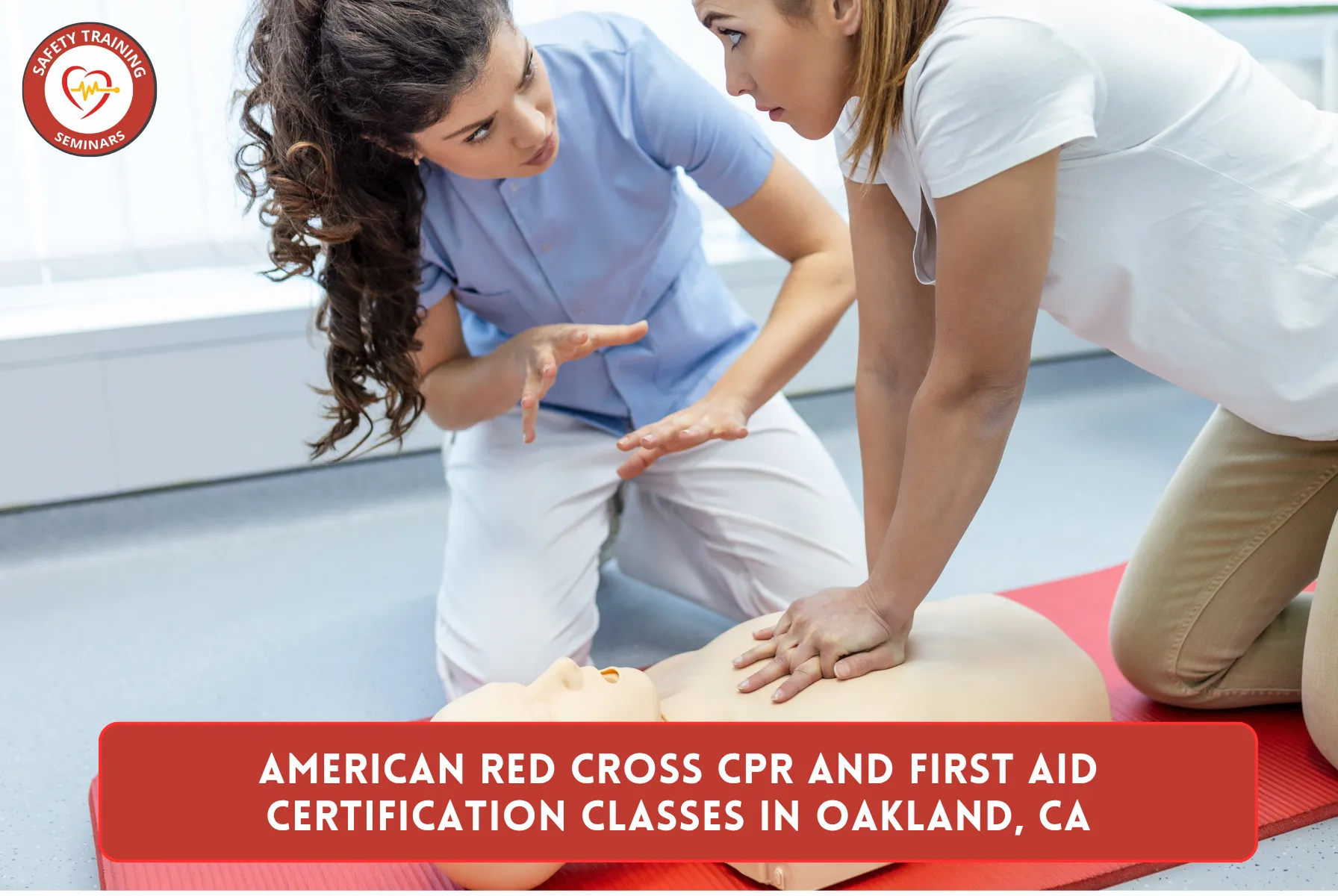
Effective CPR requires muscle memory. Correct compression depth (2 to 2.4 inches for adults), appropriate compression recoil, rate control (100 to 120 compressions per minute), and proper mask seal during ventilation cannot be evaluated through a digital quiz alone.
Legitimate courses utilize an in-person instructor or an interactive voice-assisted manikin system to verify physical technique. Confirming that your selected training path includes physical skills evaluation guarantees that your certification will be accepted by your employer or licensing authority.
Fulfilling Certification Needs with Safety Training Seminars
For professionals and organizations across the East Bay, finding accessible, compliant certification courses is essential for maintaining workforce readiness. Safety Training Seminars provides official American Heart Association (AHA) and EMS safety training options tailored to healthcare providers, industrial workers, and commercial organizations.
Classes are hosted at the Safety Training Seminars Oakland Piedmont CPR Training Center Address: 154 Santa Clara Ave., Suite 6, Oakland, CA 94610. This location serves professionals working in Downtown Oakland, medical centers near Pill Hill, and port industrial zones, as well as commuters from neighboring communities like Piedmont.
Individuals and workplace groups traveling from surrounding cities can explore localized course schedules, including Fremont CPR and BLS training options, as well as schedules for Hayward BLS and CPR classes, Livermore certification programs, and Newark training centers.
Frequently Asked Questions
Can a hospital nurse take a standard CPR/AED class instead of BLS?
No. Hospitals, surgery centers, and healthcare licensing boards specifically require the Basic Life Support (BLS) for Healthcare Providers curriculum. Standard CPR/AED courses omit essential clinical techniques, such as two-person resuscitation, pulse checks, and bag-valve-mask ventilation.
What course is required for port workers and industrial supervisors in Oakland?
Port workers, warehouse supervisors, and logistics personnel generally need a standard CPR, AED, and First Aid course aligned with OSHA 29 CFR 1910.151. Unless a worker holds a specialized medical or emergency response title on site, clinical BLS is not required.
How long does an AHA CPR or BLS certification remain valid?
American Heart Association BLS and CPR/AED certifications remain valid for two years from the end of the month in which the course was completed. Employers or licensing boards may require renewal prior to the official expiration date based on internal safety policies.
Are blended online CPR courses accepted by California employers?
Blended courses—where cognitive learning is completed online followed by an in-person, hands-on skills evaluation—are widely accepted by California employers and regulatory bodies. However, 100% online courses without physical skills practice are typically rejected.
Next Steps for Oakland Certification
Identifying the correct CPR course ensures full compliance with your industry’s governing bodies while equipping you with life-saving rescue skills. Whether you are renewing clinical credentials, fulfilling workplace safety standards, or preparing for a new position, select the training track that aligns directly with your employer’s mandates.
Review upcoming class schedules, verify your facility requirements, and explore available dates at the Oakland training facility to complete your certification efficiently.