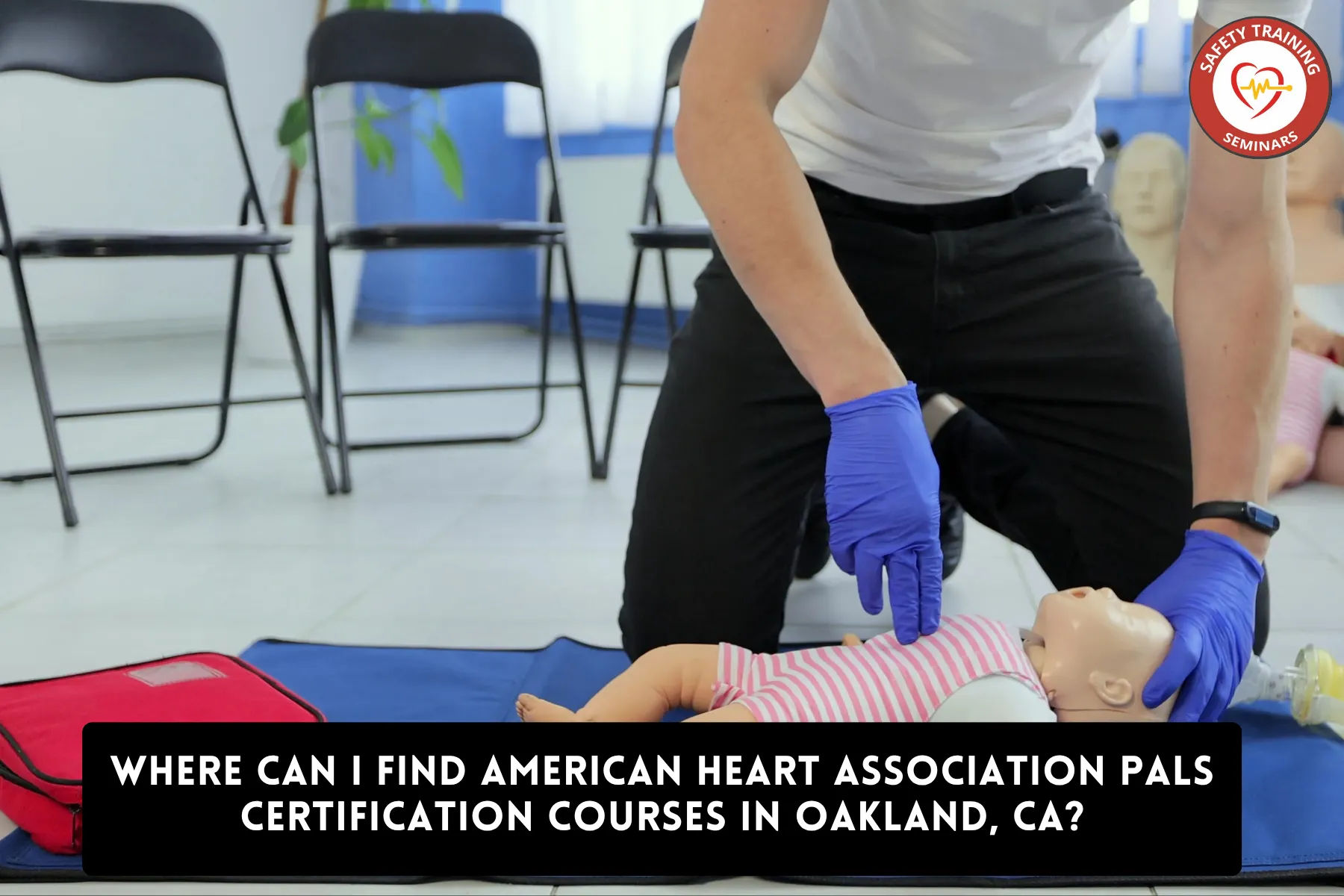
Healthcare professionals in Oakland can find American Heart Association (AHA) Pediatric Advanced Life Support (PALS) courses through Safety Training Seminars at its Oakland Piedmont training center. The course is designed for clinicians who respond to serious medical emergencies involving infants and children, including respiratory failure, shock, cardiac arrest, and certain cardiac rhythm disturbances.
The local registration page lists PALS training with an online HeartCode PALS component and an in-person skills session, as well as a skills-session option for eligible learners who have already completed the online portion. You can review the available course options and registration details on the Oakland PALS certification classes.
Where to Take a PALS Course in Oakland
For healthcare professionals working in Oakland, choosing a local training center can make it easier to plan the practical portion of a PALS course around work schedules and other professional responsibilities.
Safety Training Seminars lists its Oakland Piedmont location at:154 Santa Clara Ave., Suite 6, Oakland, CA 94610
Before registering, check the current course calendar, confirm whether you need the complete PALS course or only the in-person skills session, and verify that the selected option meets your employer’s requirements.
The Oakland PALS course registration page provides a starting point for reviewing the training information and available registration options.
What Does American Heart Association PALS Training Cover?
PALS stands for Pediatric Advanced Life Support. It focuses on recognizing and managing life-threatening conditions in infants and children through systematic assessment, timely intervention, high-quality CPR, and coordinated clinical teamwork.
The AHA’s PALS curriculum covers several areas of pediatric emergency care.
- Pediatric assessment: Recognizing signs of deterioration and identifying patients who need immediate intervention.
- Respiratory emergencies: Differentiating respiratory distress from respiratory failure and understanding early treatment priorities.
- Shock management: Recognizing compensated and decompensated shock and identifying appropriate early interventions.
- Cardiac emergencies: Recognizing unstable arrhythmias and responding to cardiopulmonary arrest.
- Resuscitation teamwork: Applying high-quality CPR, effective communication, and coordinated team dynamics.
- Post-cardiac arrest care: Understanding the principles of care following successful resuscitation.
These topics help healthcare professionals develop a structured approach to pediatric emergencies rather than relying on isolated clinical actions.
Who Should Enroll in PALS Classes in Oakland?
PALS training is intended primarily for healthcare professionals who direct or participate in managing pediatric respiratory or cardiovascular emergencies. It is particularly relevant to staff working in emergency response, emergency medicine, intensive care, and critical care.
Potential participants include:
- Pediatric and emergency department nurses
- Physicians and medical residents
- Paramedics and other emergency medical professionals
- Respiratory therapists
- Intensive care and critical care staff
- Other clinicians whose roles involve pediatric resuscitation
Healthcare professionals in Oakland should check their department’s requirements before selecting a course. An employer may specify the required training level, course format, or completion-card type.
PALS is different from Basic Life Support (BLS). BLS focuses on foundational resuscitation skills, while PALS provides more advanced training in the assessment and management of critically ill infants and children. Professionals who need both should confirm their current requirements before enrolling in either course.
Which PALS Course Format Should You Choose?
The appropriate format depends on your previous training, learning preferences, and workplace requirements. The AHA offers classroom-based and blended-learning options, with self-guided learning options also described in its current PALS course information.
Blended learning with HeartCode PALS
Blended learning combines online coursework with an in-person skills session. Students complete the online portion before attending the practical session, where they demonstrate the required skills.
This format may suit Oakland healthcare professionals who prefer to complete the knowledge-based portion around their work schedules while still receiving practical skills assessment.
Classroom-based PALS training
Classroom training provides an instructor-led learning experience with case scenarios and simulated pediatric emergencies. It allows participants to work through clinical situations and practice applying PALS concepts in a structured learning environment.
In-person skills sessions
Healthcare professionals who have already completed the required online component may be eligible to register for a corresponding skills session. Check the registration requirements before booking, as a skills session alone is not a substitute for completing all components required for an AHA PALS course completion card.
The AHA’s official PALS course information explains the available formats and their requirements.
Preparing for Your PALS Class in Oakland
Preparing before the course can help you focus on the clinical reasoning and practical skills involved in pediatric emergency care.
Start by reviewing your existing knowledge of BLS, including high-quality CPR and basic resuscitation principles. PALS builds on these foundations, so familiarity with them can make the advanced material easier to follow.
Next, confirm the learning materials required for your selected course. Depending on the format, you may need the appropriate PALS Provider Manual or digital learning materials. Students taking blended learning should also confirm that they have completed the assigned online portion before attending the practical session.
Before your appointment, verify the following:
- Whether you are registering for an initial course, a renewal, or a skills session.
- Whether your employer requires a specific AHA course format.
- Which learning materials you need to bring or complete beforehand.
- The scheduled date, start time, and arrival instructions.
- The requirements for successfully completing the course.
These checks can help prevent registration errors and reduce the chance of choosing a course that does not satisfy your professional requirements.
PALS Training for Oakland’s Healthcare Community
Oakland’s healthcare professionals work across a range of clinical settings, from emergency departments and inpatient units to outpatient services and emergency medical response. For clinicians whose responsibilities include caring for critically ill children, PALS training offers a structured framework for recognizing deterioration and coordinating appropriate interventions.
The course can be particularly relevant for professionals who encounter pediatric respiratory emergencies, circulatory instability, or cardiac arrest as part of their clinical duties. Its emphasis on team communication and systematic assessment also helps participants understand how individual actions contribute to a coordinated emergency response.
However, PALS is not automatically required for every healthcare position. Requirements vary by employer, specialty, and job responsibilities. Oakland-area clinicians should confirm the applicable standards with their supervisor, credentialing department, or hiring organization before registering.
For professionals in nearby East Bay communities who work in Oakland, a locally listed training option may also be worth considering. The important factor is not simply proximity but whether the course format, completion requirements, and schedule fit the participant’s needs.
How to Choose the Right PALS Certification Course
When comparing PALS classes, look beyond the course title. The provider, training format, completion requirements, and registration details all matter.
Use these criteria to evaluate your options:
- Verify the course provider. Confirm that the training is offered through an authorized AHA training arrangement and that the course leads to the appropriate AHA PALS completion card.
- Match the course to your requirements. Determine whether you need the full Provider Course or an eligible blended-learning skills session.
- Check the complete schedule. Review both online and in-person requirements, where applicable.
- Understand the completion process. Ask what assessments are required and what happens if you need additional practice or another attempt.
- Confirm the cost. Review the current registration price and whether required learning materials are included.
- Check the completion-card validity. AHA PALS course completion cards are generally valid for two years, but you should verify your current card’s expiration date and your employer’s renewal policy.
These checks help ensure that your time and training expenses contribute directly to meeting your professional goals.
Frequently Asked Questions About PALS Courses in Oakland
How long does an AHA PALS course take?
The duration depends on the format, course requirements, and participant experience. The AHA lists an estimated range of 5.5 to 17.5 hours for its PALS course options. Check the specific Oakland registration listing for the schedule that applies to your selected course.
Can I complete PALS training online?
Some PALS options use blended learning, which combines online coursework with an in-person skills session. Completing the online portion alone does not satisfy all requirements for the blended course completion card; the required hands-on component must also be completed.
How long is an AHA PALS completion card valid?
An AHA PALS Provider course completion card is generally valid for two years. Check the expiration date on your card and confirm any additional renewal requirements established by your employer.
Is PALS appropriate for nurses and paramedics?
Yes. PALS is designed for healthcare professionals who participate in managing pediatric emergencies, including nurses, paramedics, physicians, and other personnel involved in emergency or critical care. Whether you need the course depends on your role and employer’s requirements.
Should I take BLS or PALS?
Choose the course that matches your professional responsibilities. BLS focuses on foundational resuscitation skills, while PALS covers advanced assessment and management of critically ill infants and children. Some professionals need both, so verify your workplace requirements before registering.
How can I find current PALS class dates in Oakland?
Visit the Safety Training Seminars Oakland PALS registration page to review the available registration information. Confirm the date, format, price, and completion requirements directly before making your booking.
Find a PALS Certification Course in Oakland, CA
Finding the right PALS course starts with identifying the training format and completion requirements that match your professional role. Safety Training Seminars lists a local Oakland Piedmont training option for healthcare professionals seeking AHA PALS training.
Review the course details, confirm your employer’s requirements, and select the appropriate training pathway before registering. Visit the Oakland PALS certification course page to explore the available options and take the next step toward completing your pediatric advanced life support training.