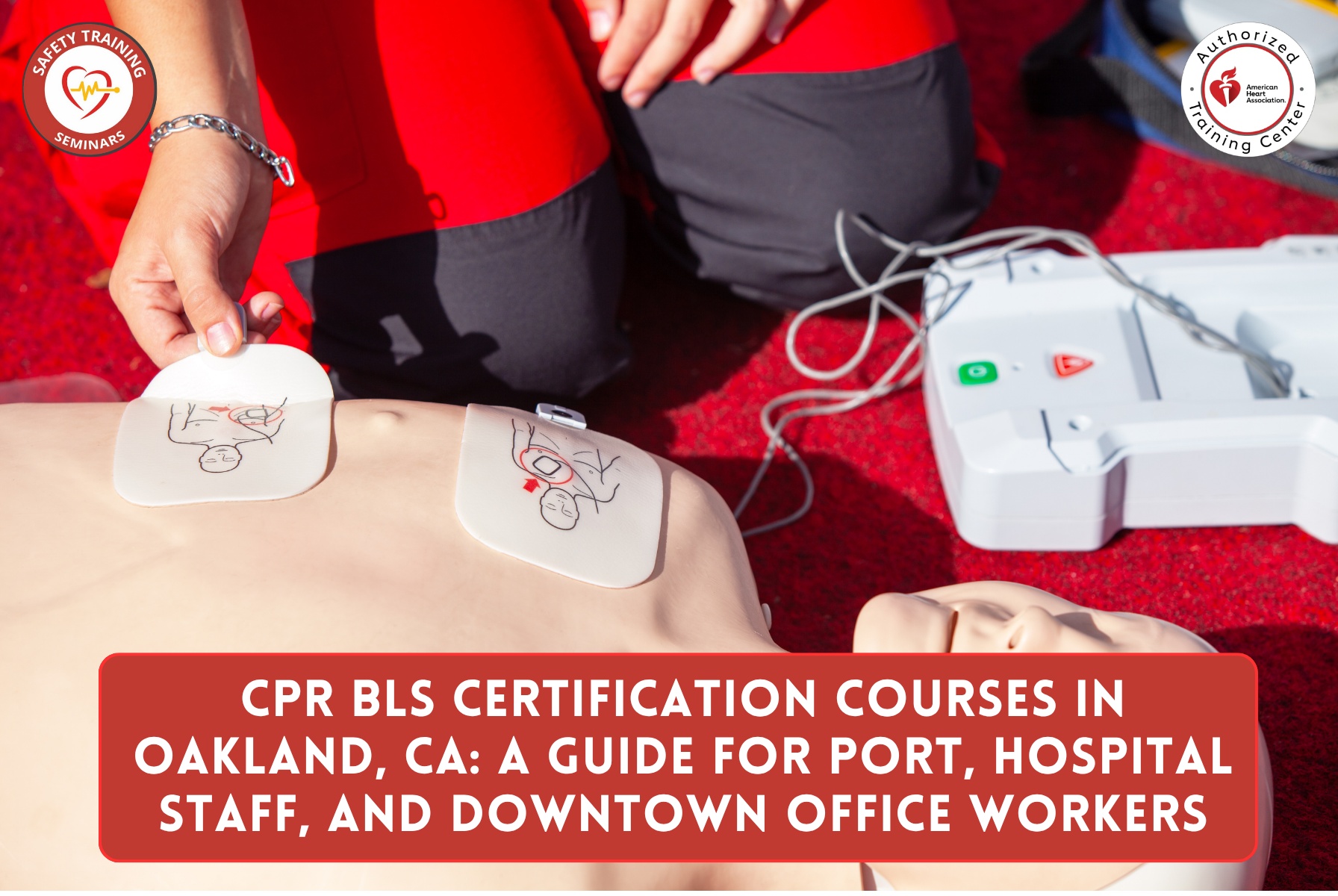
Oakland’s workforce doesn’t fit one mold, and neither does its need for CPR training. A longshoreman working the Port of Oakland has a very different emergency response requirement than a nurse at a downtown clinic or an office manager overseeing a workplace safety program near Lake Merritt. If you’re trying to figure out which BLS CPR certification course actually applies to your job, the short answer is that it depends on your role, your employer’s specific policy, and whether OSHA or a licensing board sets the requirement for your workplace. This guide breaks down what each group typically needs and where to confirm it.
Key takeaway: BLS certification is generally required for healthcare providers who may respond to cardiac emergencies as part of a clinical team, while general CPR and First Aid training is more common for industrial workplaces, port operations, and office environments with a workplace safety program. Confirming which category applies to your job, rather than assuming, is the fastest way to choose the right course the first time.
Why One Article Can’t Give You One Answer
Search results for CPR certification often assume every reader needs the same course. In a city like Oakland, that’s rarely true. Port operations fall under OSHA workplace safety requirements. Hospitals and clinics require healthcare-specific BLS certification tied to patient care. Downtown offices typically build CPR training into a general workplace safety or emergency response plan, which is a different standard entirely.
Knowing which category you fall into changes which course you should register for, so it’s worth reading the section below that matches your situation before enrolling in anything.
For Port and Dockworkers: What OSHA Requires
Longshore and maritime work is covered under federal OSHA regulations that address emergency medical response at the worksite, since injuries in dock and terminal environments can be serious and immediate medical facilities may not be on-site. Employers in these environments often designate specific employees to hold current CPR and First Aid certification as part of a broader safety program.
If you work at or near the Port of Oakland, the relevant question isn’t whether you personally want BLS certification, but whether your employer’s safety program specifies CPR and First Aid, First Responder training, or a higher level of certification for designated safety personnel. OSHA’s general industry and maritime standards outline employer responsibilities for medical and first aid provisions, but the specific certification level is typically set by your employer’s safety officer or union agreement. Check with your safety coordinator directly rather than assuming a general public CPR class covers what’s required.
For Hospital and Clinical Staff: Why BLS Specifically
Healthcare employers in Oakland, including hospitals, urgent care clinics, and outpatient facilities, commonly require BLS for Healthcare Providers rather than a general CPR card. This certification level covers two-rescuer CPR, use of a bag-valve mask, and team-based resuscitation skills that a lay-rescuer course doesn’t include.
Nursing students preparing for clinical rotations at Oakland-area hospitals should check their program handbook for the exact certification wording required, since some clinical sites are specific about which certifying organization’s card they’ll accept. New hires in clinical roles often need proof of current BLS certification before their first shift, so timing your class around your start date matters.
For Downtown Office Workers: A Different Kind of Requirement
Office-based workplace teams generally don’t need clinical-level BLS certification. Instead, many downtown Oakland employers build general CPR, AED, and First Aid training into a broader workplace safety plan, sometimes tied to building emergency response teams or designated first-aid staff on each floor.
If your employer has asked you to get certified as part of an office safety initiative, a general CPR and First Aid course is typically the appropriate fit rather than the healthcare-specific BLS course. It’s worth confirming with HR or your safety committee exactly which course they’ve specified, since “CPR certified” gets used loosely across very different course levels.
What Actually Happens During Class
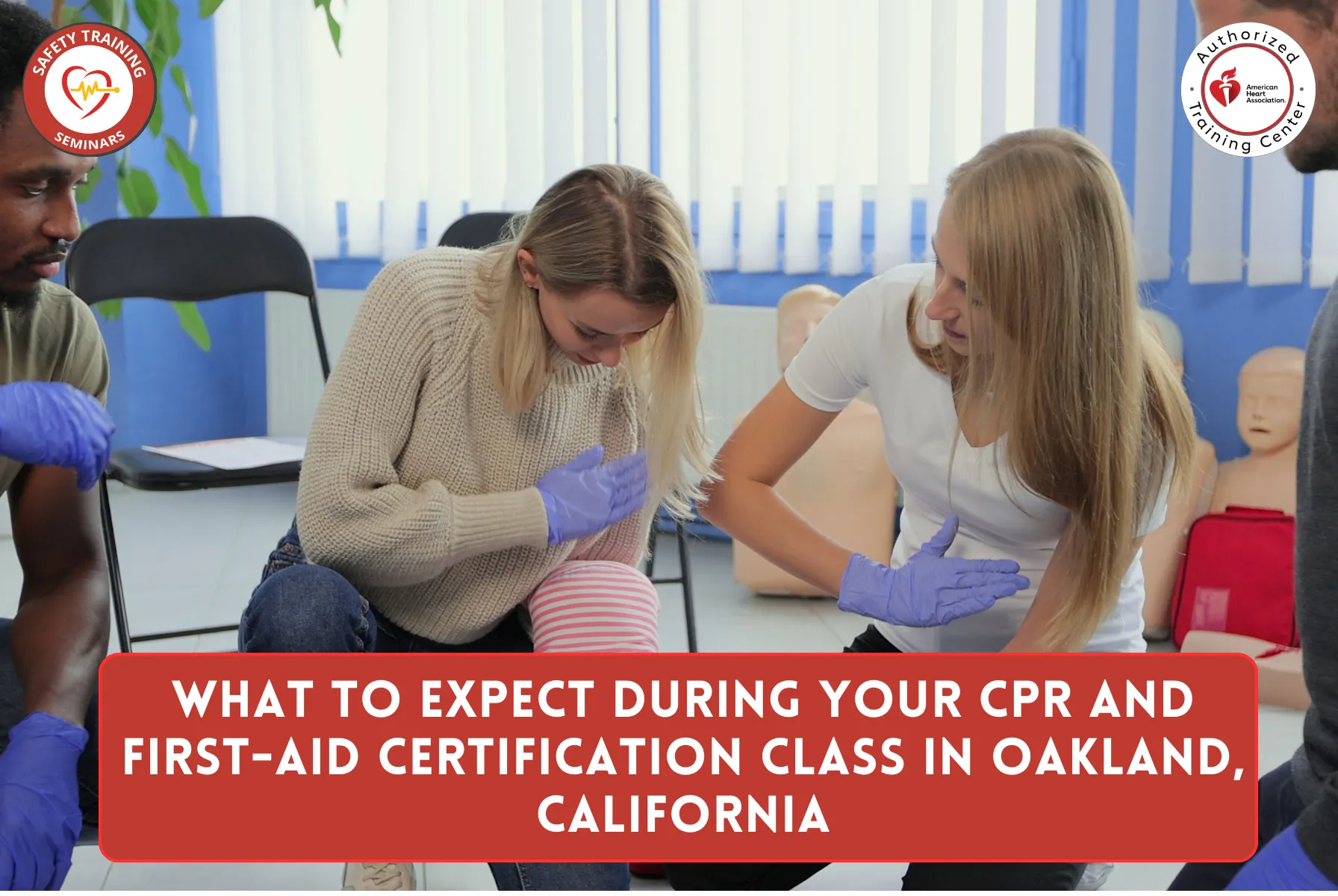
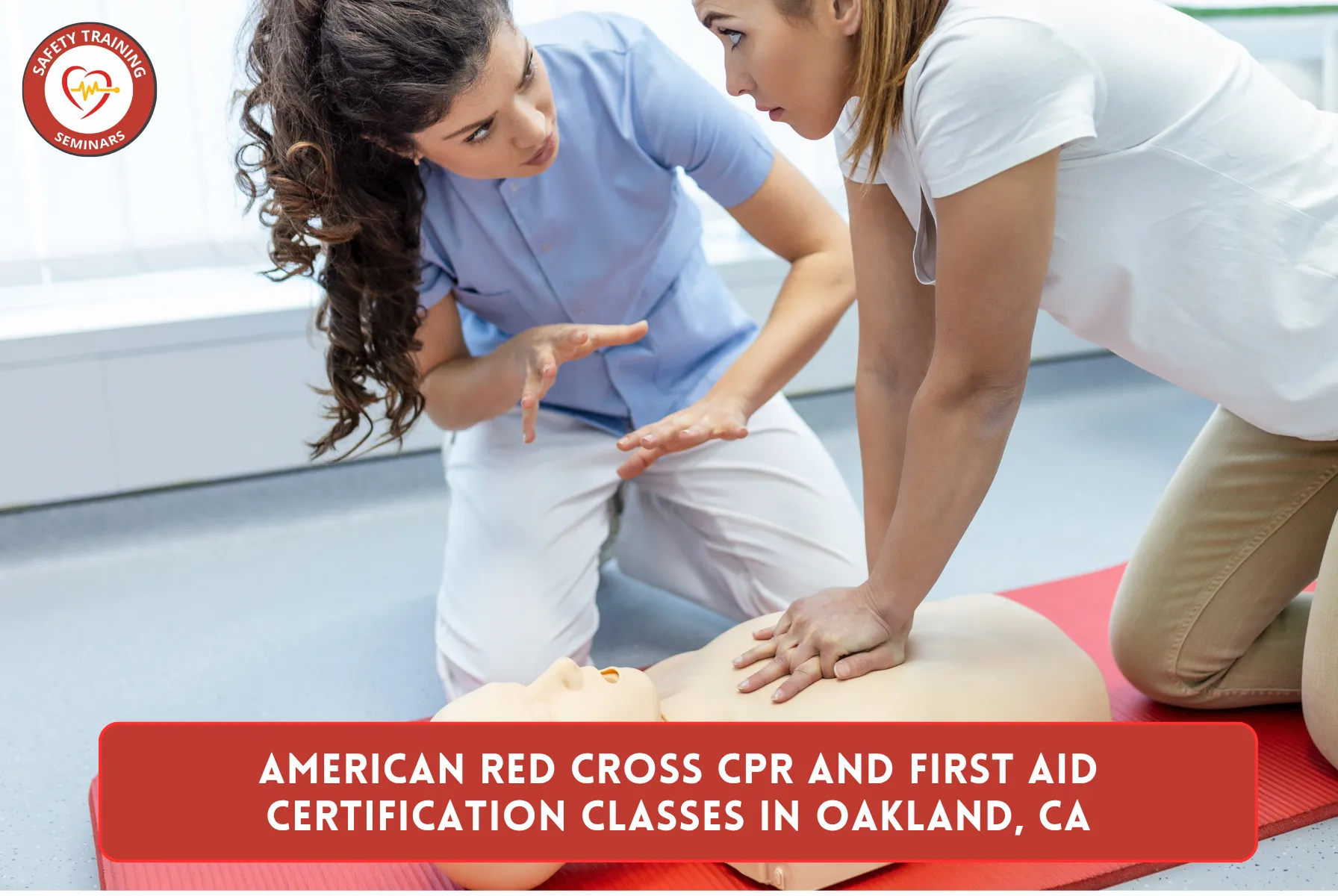
Regardless of which course applies to you, most CPR and BLS classes follow a similar hands-on format:
- Recognizing signs of cardiac or respiratory emergency
- Adult, child, and infant CPR technique
- AED operation and practice
- Choking response
- A skills evaluation performed on a manikin with instructor observation
The hands-on component is the part that separates a legitimate course from an online-only shortcut. Compression depth, rate, and airway management are physical skills that need to be demonstrated, not just described in a video.
Is an Online-Only Certificate Accepted?
This depends entirely on who’s requiring your certification. OSHA-regulated workplace safety programs, hospitals, and clinical training sites often require an in-person skills evaluation specifically because performance can’t be verified through a video quiz. Before registering for any course, ask your employer, safety officer, or program coordinator whether they require blended in-person training or accept a fully online card. It’s a quick question that prevents having to repeat a class later.
Choosing a Legitimate Local Provider
A few questions help separate a solid training option from a shortcut:
- Does the course include genuine hands-on skills practice, not just video and quiz content?
- Is the card format one your employer has already confirmed they’ll accept?
- Is there a physical training location, or is this exclusively a mail-order certificate?
- Will the provider answer specific questions about class structure before you register?
A training provider willing to answer these directly is usually the safer choice over one relying on vague marketing claims.
Training Options for Oakland’s Workforce
Safety Training Seminars operates a training center at 154 Santa Clara Ave., Suite 6, Oakland, CA 94610, near Piedmont Avenue, offering BLS, CPR, First Aid, ACLS, and PALS certification courses for healthcare workers, workplace safety teams, and community members throughout the East Bay. Workers commuting from Berkeley or Emeryville for shifts near downtown Oakland or the port often look for a class schedule that fits around rotating hours.
Readers ready to compare current class dates can review BLS and CPR certification training near Berkeley or CPR and First Aid classes available in Emeryville if those locations fit a commute better. Workers based on the Alameda side of the estuary, including those working near the Alameda docks, may also find it useful to check BLS and ACLS course listings for Alameda, CA before choosing a class date.
Frequently Asked Questions
Do dockworkers at the Port of Oakland need BLS certification specifically? Not necessarily. Maritime and longshore employers typically follow OSHA-based safety requirements, which often call for CPR and First Aid certification for designated safety personnel rather than the healthcare-specific BLS course. Confirm the exact requirement with your employer’s safety officer or union representative.
What certification do downtown Oakland office workers usually need for a workplace safety program? Most office-based safety programs require general CPR, AED, and First Aid training rather than clinical BLS certification. Check with HR or your building’s safety coordinator to confirm which course level your employer has specified.
Is BLS certification required before starting a nursing job at an Oakland hospital? Many hospitals require current BLS certification before a clinical employee’s first shift. Confirm the exact requirement, including which certifying organization’s card is accepted, with your hospital’s HR or clinical education department.
Can office workers and healthcare staff take the same CPR class in Oakland? Course content differs by certification level. Office workplace teams typically need general CPR and First Aid, while healthcare staff need BLS, which includes additional team-based resuscitation skills. Confirm which level applies to your role before registering.
Are there CPR class options near Oakland for workers commuting from Dublin or Fremont? Class availability and scheduling vary by location. It’s worth checking current listings for the city closest to your commute rather than assuming a specific schedule will be open.
Choosing the Right Course for Your Role
Whether you’re working a shift at the port, a clinical rotation at an Oakland hospital, or managing a safety program from a downtown office, the right first step is confirming exactly which certification level your employer or licensing board requires before assuming one course fits every job. Safety Training Seminars offers BLS, CPR, First Aid, ACLS, and PALS courses at its Oakland training center on Santa Clara Avenue, and reviewing the current course page for your area is a straightforward way to compare schedules and confirm details before enrolling.