Getting certified in lifesaving techniques is one of the most practical steps you can take for your career and your community. Whether you are a nursing student preparing for clinical rotations, a day-care provider meeting state licensing requirements, or a healthcare professional updating your credentials, having up-to-date emergency training matters. However, picking the wrong class can waste your time, leave you with an unaccepted card, or fail to give you true confidence when a real crisis happens.
When searching for a reliable CPR and First-aid Certification Course, many East Bay residents accidentally sign up for convenient-looking online classes that lack hands-on practice or end up with certifications that local employers reject. Selecting the right class requires looking past low price tags and slick marketing.
At Safety Training Seminars, we help Oakland residents get officially certified without hassle. Located at 162 Santa Clara Ave Ste 6, Oakland, CA 94610, United States, our training center gives healthcare providers, educators, and community members fast, stress-free access to top-tier courses.
Quick Comparison: What to Look For in an Oakland CPR Class
To help you avoid common traps, here is a quick overview of what sets valid, practical training apart from unaccredited options:
| Feature | Official AHA Certification | Unaccredited / Online-Only |
| Employer Acceptance | 100% accepted by major hospitals & schools | Frequently rejected by HR departments |
| Hands-On Skills Practice | Required with real-time feedback | None (or simulated on a computer) |
| Certification Delivery | Official Same-Day eCard | Printable unofficial PDF certificate |
| Regulatory Compliance | Meets OSHA, EMSA, and Title 22 standards | Fails to meet California state requirements |
| Instructor Support | Live expert instruction and evaluation | Automated grading or self-study modules |
Mistake 1: Choosing an Online-Only Course Without Hands-On Practice
The most common trap people fall into is taking a 100% online CPR class. It sounds convenient—you sit on your couch, watch a few videos, take a quiz, and print a certificate. But in emergency medicine, physical muscle memory is everything.
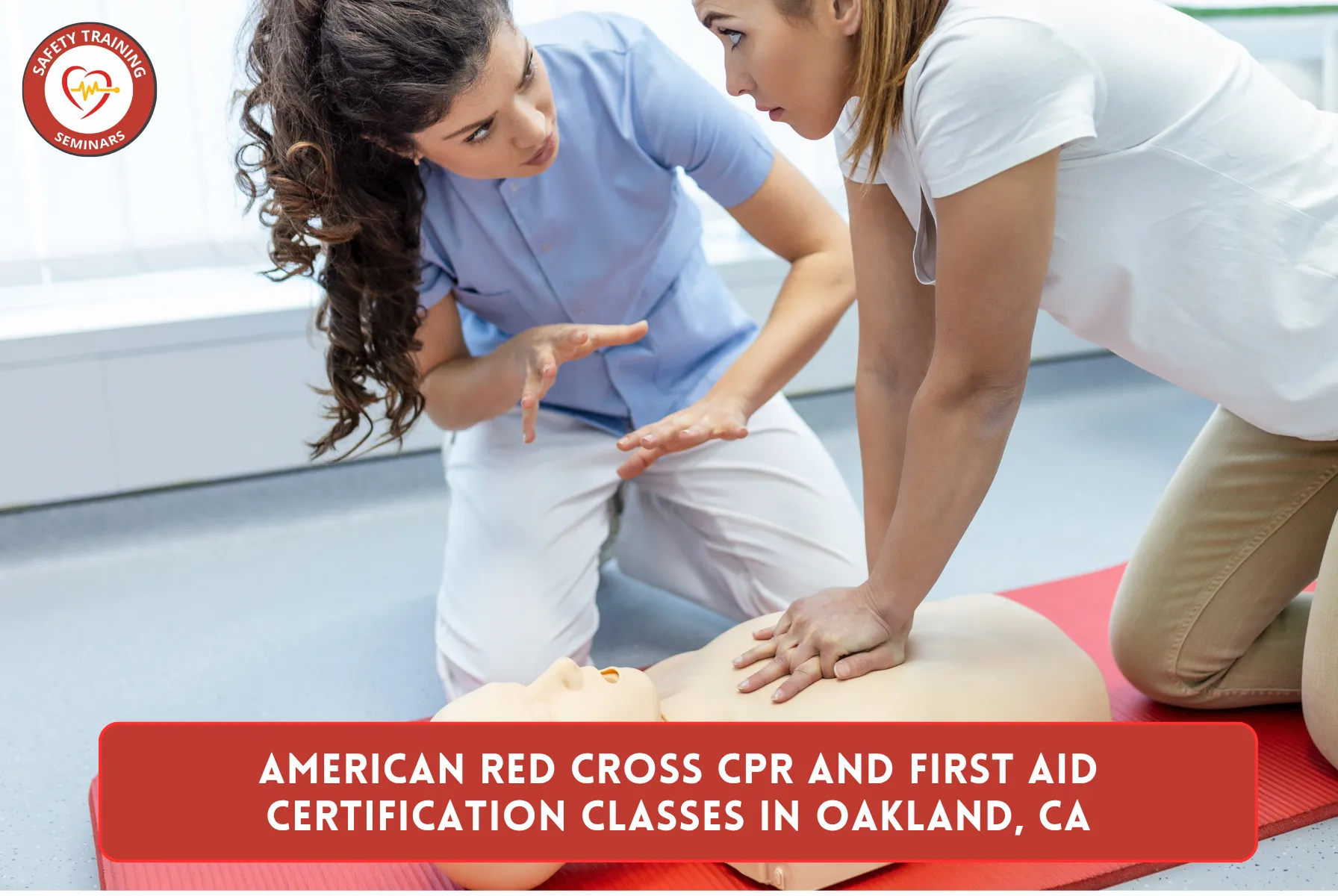
Compressing a chest to the proper depth of at least two inches takes real physical effort. Delivering effective rescue breaths using a pocket mask or bag-valve mask requires precise hand placement. Online-only courses cannot teach your body how to respond under pressure.
More importantly, major employers, regulatory boards, and licensing bodies across Alameda County do not accept fully online certificates. Hospitals require physical skills evaluations. If you are taking a BLS Certification Course in Oakland, CA to work in a clinical setting, an online-only card will be turned down by Human Resources during onboarding, forcing you to pay twice and retake the training.
Valid hybrid courses exist, but they always require an in-person skills verification session on real manikins before an official eCard can be issued.
Mistake 2: Overlooking Accreditation from the American Heart Association
Not all certification cards carry the same weight. A major mistake candidates make is assuming every CPR provider issues universally accepted credentials.
In healthcare and emergency services, the American Heart Association (AHA) sets the gold standard. Facilities like Kaiser Permanente Oakland Medical Center on Broadway or Sutter Health’s Alta Bates Summit Medical Center near Pill Hill require staff to hold official AHA credentials.
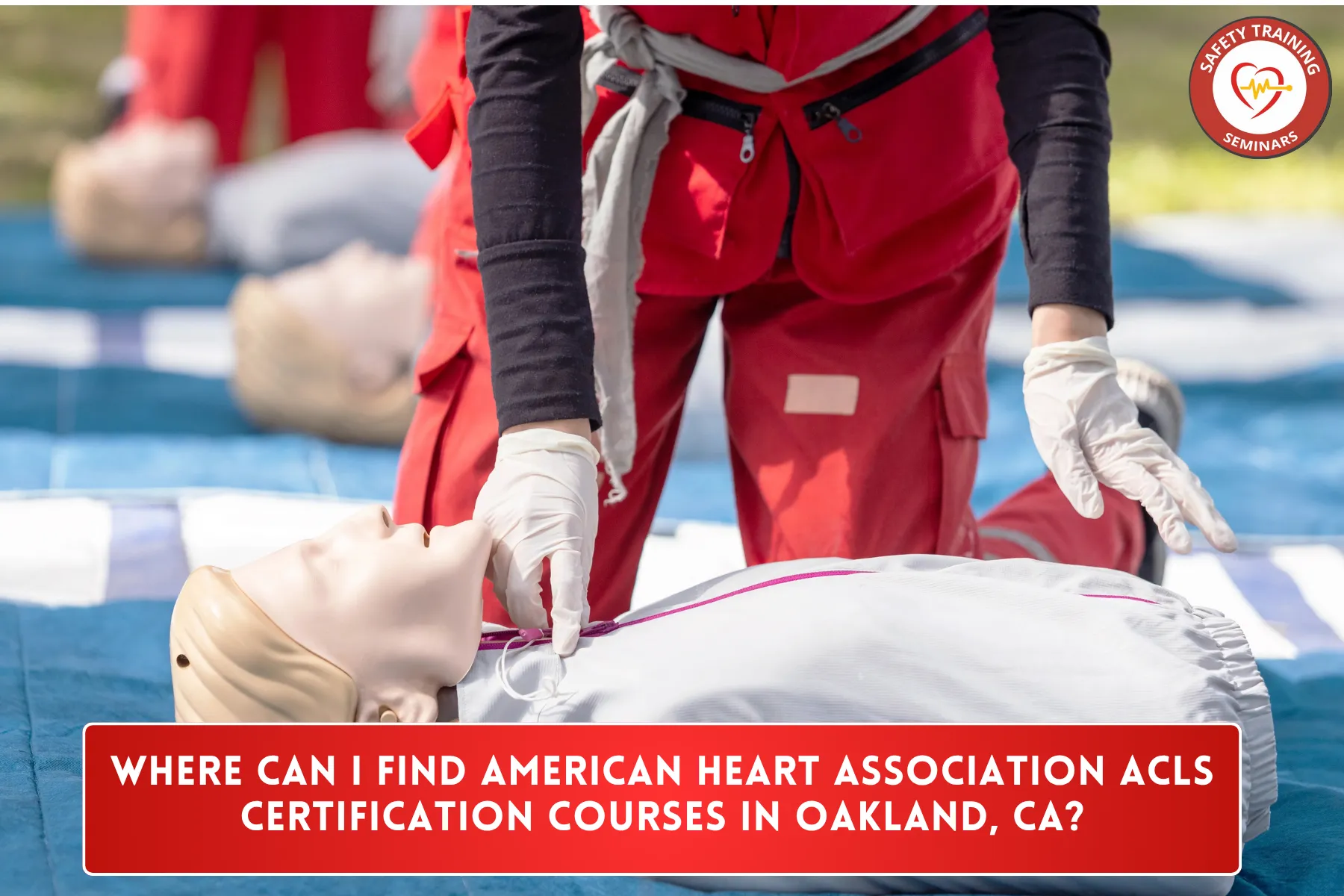
If you register for an off-brand course, you risk taking a class that does not comply with official guidelines. For clinical personnel, an AHA BLS CPR Certification Class in Oakland, CA ensures full compliance with hospital standards. The same applies to advanced life support training—hospital units will explicitly require AHA ACLS Certification Classes in Oakland, CA or AHA PALS Certification training in Oakland, CA rather than unaccredited alternatives.
Always double-check that your training center issues genuine AHA eCards directly to your email upon completion.
[ Real-World Local Scenario ]
A nursing student at Samuel Merritt University books a cheap online CPR course
two days before starting clinicals at Alta Bates Summit Medical Center. On day
One, HR rejects the non-AHA printable certificate. The student must urgently
find a same-day local CPR BLS class in Oakland, CA to avoid missing clinical hours.
Mistake 3: Selecting an Inconvenient Location or Inflexible Schedule
Oakland is a bustling hub, and traffic along I-580 or Highway 24 can turn a short drive into a long headache. Choosing a training center far away or hidden in an inaccessible area makes completing your certification needlessly stressful.
Look for a facility situated near major transportation corridors and public transit. For instance, our site at 162 Santa Clara Ave Ste 6 sits right near Grand Avenue and Harrison Street, making it easy to reach from Downtown Oakland, Adams Point, and Lake Merritt. Commuters coming off AC Transit lines or traveling from neighboring areas find our central location simple to navigate.
Flexibility matters just as much as location. Shift workers, busy parents, and students need options. Look for providers offering regular weekday schedules, weekend sessions, and fast-track blended learning options so you don’t have to sacrifice an entire workday to stay certified.
Safety Training Seminars also maintains regional access across the Bay Area, providing local CPR, BLS, ACLS, PALS, NRP, and First Aid course options at 1953 Taraval St, San Francisco, CA 94116, United States for individuals who split their work hours across the bay.
Mistake 4: Taking the Wrong Level of Training for Your Specific Profession
CPR courses are not “one size fits all.” Registering for the wrong level of training leads to spending time on material you don’t need—or worse, missing critical content required by your employer or licensing board.
Here is a quick breakdown of who needs which course:
Basic Life Support (BLS)
Designed for healthcare professionals and students in clinical environments.
- Registered Nurses (RNs) and Licensed Vocational Nurses (LVNs)
- Nursing students preparing for clinical rotations
- Emergency Medical Technicians (EMTs) and Paramedics
- Dentists, Dental Hygienists, and Dental Assistants
- Pharmacists and Physical Therapists
If you belong to any of these fields, enroll directly in a dedicated CPR BLS class in Oakland, CA.
Heartsaver CPR & First Aid
Designed for community members, non-clinical workers, and regulatory compliance under OSHA or EMSA.
- Teachers, daycare staff, and preschool workers
- Youth sports coaches and personal trainers
- Construction workers, electricians, and industrial site staff
- Security guards and corporate safety team leads
If you fall into these roles, select a general CPR & FIRST AID training in Oakland, CA package rather than medical-grade BLS.
Advanced Cardiac & Pediatric Courses (ACLS / PALS)
Designed for specialized medical staff working in critical care, emergency medicine, or surgical settings.
- ICU and ER Nurses
- Anesthesiologists and Physicians
- Pediatric specialists requiring a dedicated PALS Certification training in Oakland, CA
- Critical care transport teams looking for an ACLS Certification course in Oakland, CA
Mistake 5: Waiting Until the Last Minute and Missing Same-Day Certification
According to data from the American Heart Association, immediate high-quality CPR performed during cardiac arrest can double or triple a patient’s chances of survival. Yet, many professionals delay renewing their credentials until their card is days away from expiring.
Waiting until the last minute creates unnecessary panic. Many basic community centers take 3 to 5 business days to process paperwork and mail out cards. If your employment depends on presenting an active card by Monday morning, waiting for physical mail puts your job on hold.
Always confirm that your training provider offers official same-day digital eCards. With digital processing, as soon as you complete your hands-on skills test, your official AHA eCard is emailed straight to your inbox, giving you immediate proof of compliance for HR departments and regulatory agencies.
What to Expect During Your In-Person CPR Training
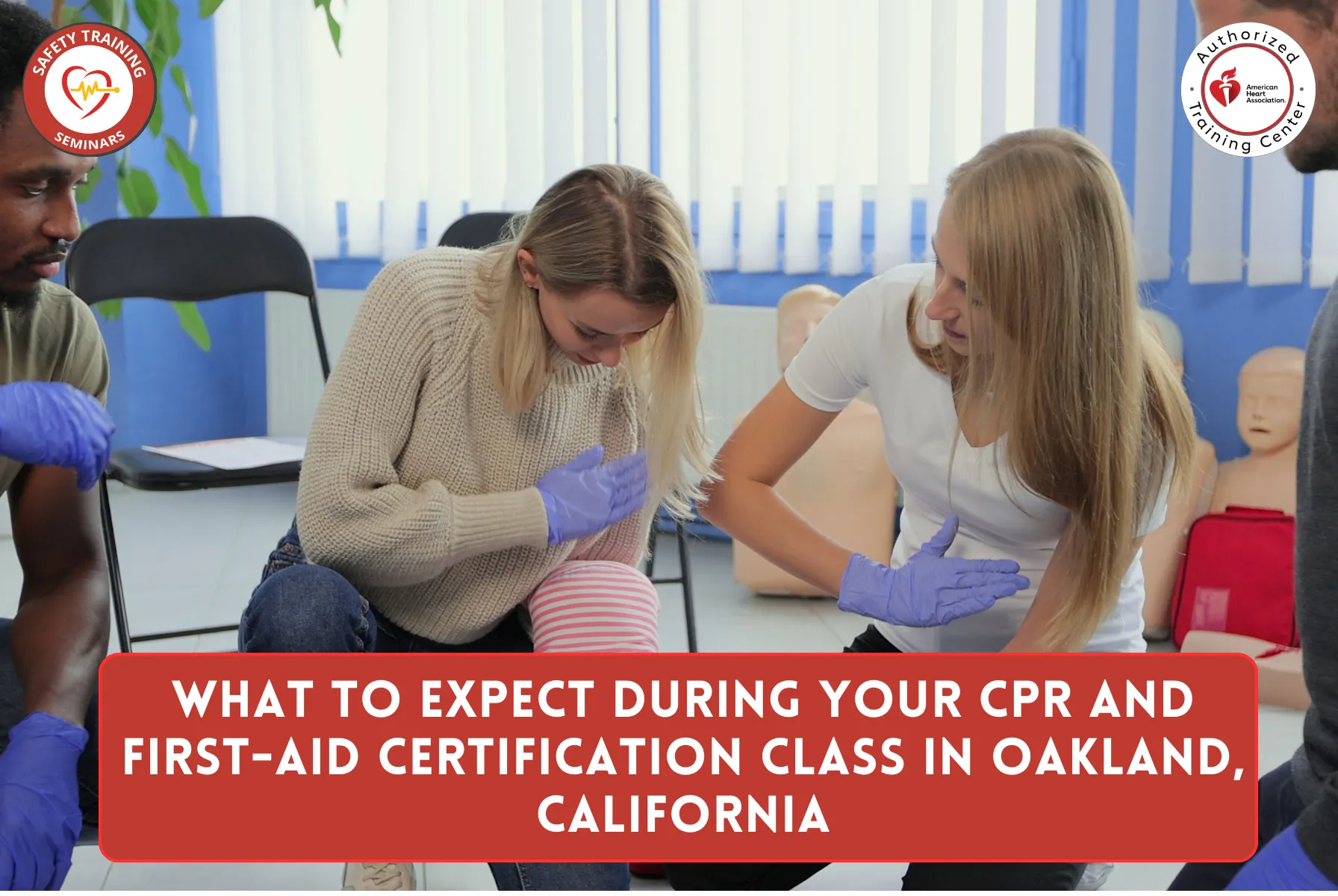
When you enroll in a reputable CPR & First Aid Course in Oakland, CA, the hands-on session is straightforward, practical, and low-stress. You can expect to cover:
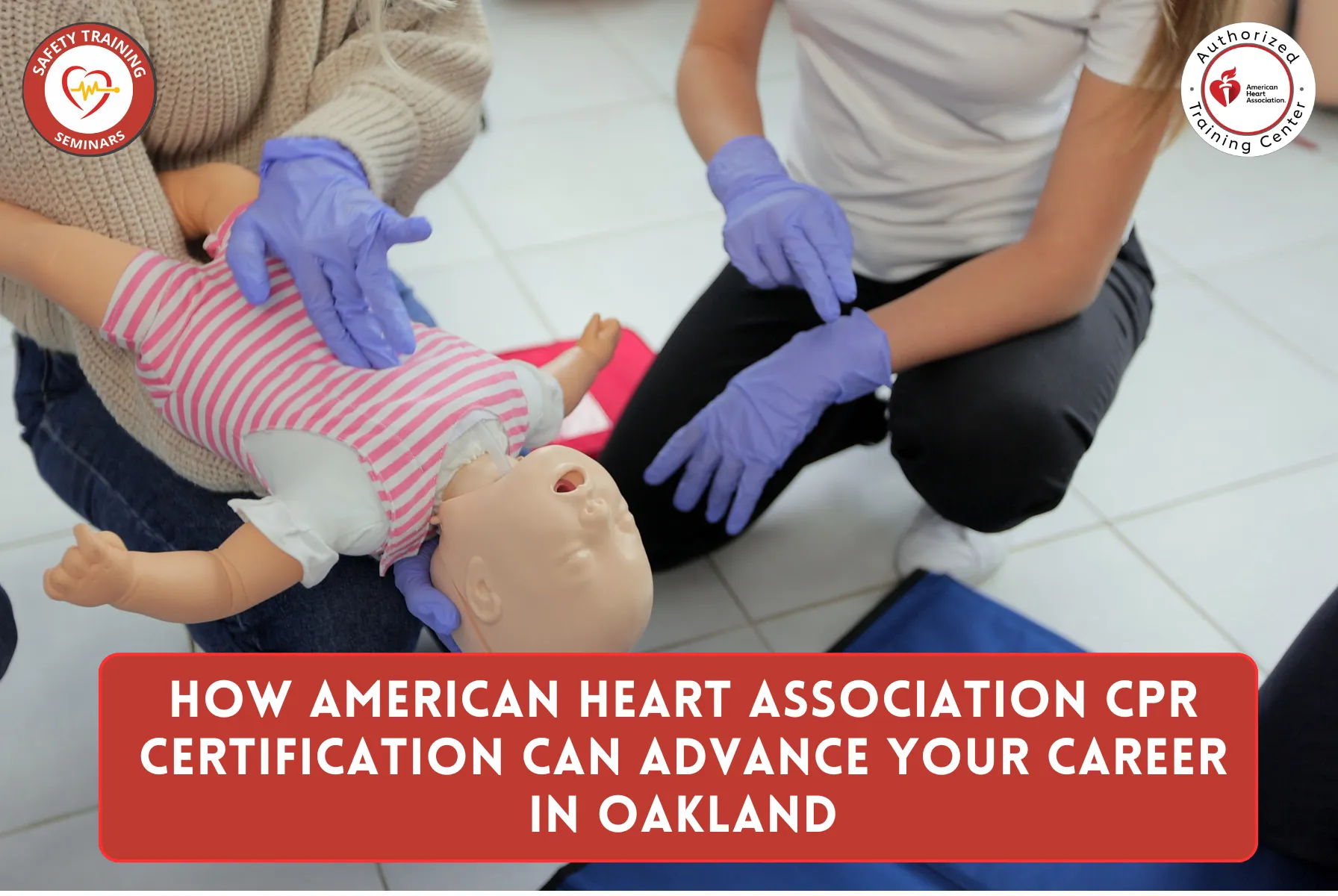
- Adult, Child, and Infant CPR Techniques: Master chest compressions, hand placement, and depth using responsive feedback manikins.
- Automated External Defibrillator (AED) Operation: Learn how to quickly deploy and safely operate an AED in public or medical environments.
- Foreign-Body Airway Obstruction (Choking): Practice clear rescue maneuvers for conscious and unconscious choking victims of all ages.
- Team Dynamics and Rescue Breathing: For BLS students, practice multi-rescuer coordination and pocket-mask/bag-valve mask ventilation.
- Practical Skills Check: Demonstrate your skills to an instructor who ensures you perform each step correctly and comfortably.
Frequently Asked Questions About Oakland CPR Classes
How long does a CPR and First-aid Certification Course take to complete?
For standard community classes or BLS sessions, in-person training typically takes between 2 to 3 hours depending on whether you complete part of the module online prior to your arrival. Blended learning allows you to complete cognitive coursework at home and finish your hands-on skills evaluation in 30 minutes.
Is an AHA CPR card accepted everywhere in Alameda County?
Yes. American Heart Association credentials are the gold standard recognized by all major hospitals, clinics, emergency services, colleges, and regulatory agencies throughout Oakland, San Francisco, and the broader Bay Area.
Can I get my certification card on the same day as my class?
Yes. When you take your course with us, your official AHA eCard is issued digitally on the very day you pass your hands-on skills evaluation.
What should I wear to my hands-on CPR training session?
Wear comfortable, casual clothing. You will be practicing rescue skills, kneeling on the floor, and performing chest compressions on manikins, so flexible attire and closed-toe shoes are recommended.
How often do I need to renew my CPR and First Aid certification?
Official AHA CPR, BLS, ACLS, and PALS certifications remain valid for two years from the date of issue. You must take a renewal class before the end of the expiration month listed on your eCard.
Secure Your Official CPR Certification in Oakland Today
Avoiding these common mistakes comes down to choosing an accredited, convenient, and reliable local training provider. Whether you need a healthcare-level BLS Certification Course in Oakland, CA or comprehensive CPR, BLS, ACLS and PALS courses in Oakland, CA, getting trained properly ensures you are ready when seconds count.
Safety Training Seminars makes local certification fast, easy, and stress-free. Visit our training center at 162 Santa Clara Ave Ste 6, Oakland, CA 94610, situated right by Lake Merritt and Adams Point, or explore our class schedules online to sign up for your hands-on session today!
- Address: 162 Santa Clara Ave Ste 6, Oakland, CA 94610, United States
- Get Directions: Google Maps Location
- Register Online: CPR Classes Oakland